
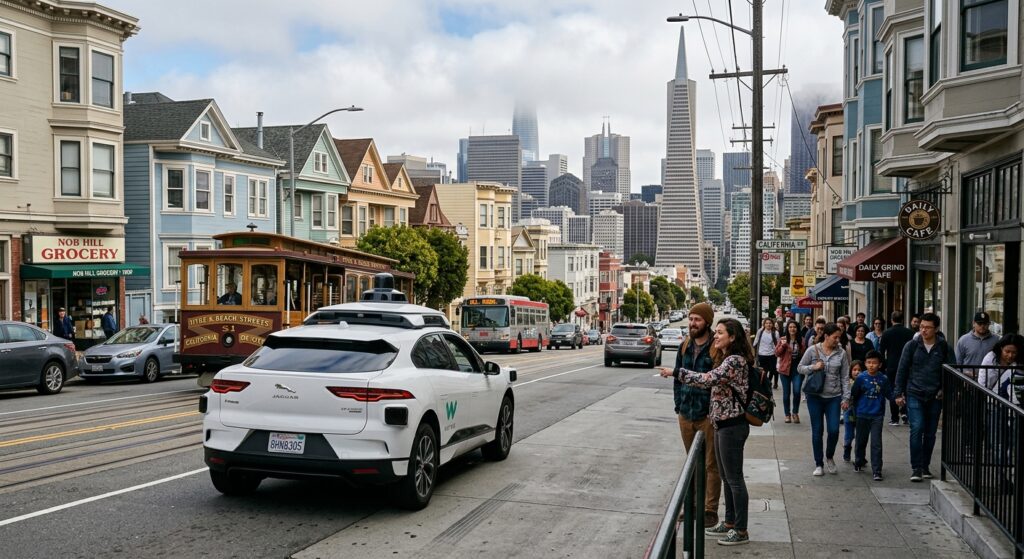
Waymo has resumed its robotaxi service in San Francisco after a brief suspension due to a power outage affecting approximately 7,000 PG&E customers. The company made adjustments to its operations to ensure safety during the outages.
Highlights
- Waymo’s robotaxi service temporarily paused due to power outages in San Francisco.
- Service adjustments followed concerns over safety and local conditions.
- San Francisco Mayor advocates for stricter regulations on autonomous vehicles during emergencies.
Resuming Operations Amidst Challenges
Waymo, the autonomous vehicle subsidiary of Alphabet, recently faced operational challenges in San Francisco after a significant power outage hit the area, impacting around 7,000 customers of PG&E. In light of this, Waymo responded by temporarily suspending its robotaxi services, which included halting operations on certain freeway routes. This decision underscores the complexities of integrating autonomous vehicles into cities, particularly during unexpected incidents like power failures.
A Waymo spokesperson explained that the company made these “temporary adjustments” to closely monitor local conditions and assess the situation before resuming normal services. This approach reflects the company’s commitment to ensuring rider safety while addressing the operational challenges posed by power outages. Previous incidents where Waymo vehicles stalled during blackouts have highlighted the hurdles of relying on autonomous technology in urban settings.
Implications and Future Considerations
The implications of these outages extend beyond operational interruptions; they prompt significant discussions around the regulation and management of autonomous vehicles during emergencies. San Francisco Mayor Daniel Lurie has called for stricter state regulations to provide clear guidelines on how self-driving cars should react during such incidents, indicating a need to establish more robust safety measures. This push for regulation may shape the future of autonomous transportation, ensuring that these vehicles can navigate unpredictable circumstances safely and efficiently.
As cities continue to adopt advanced technologies like autonomous vehicles, the challenges posed by unforeseen events necessitate a reevaluation of safety protocols and operational frameworks. Stakeholders in the autonomous vehicle industry may need to engage more proactively with local authorities to create comprehensive guidelines to enhance safety for both passengers and pedestrians in emergency situations.
In conclusion, Waymo’s recent suspension and subsequent resumption of service in San Francisco illustrate both the potential and peril of deploying autonomous vehicles in urban areas. As cities integrate these technologies into their transportation ecosystems, how can we balance innovation with safety? What role should local governments play in regulating autonomous vehicle operations during critical incidents? And how can technology evolve to better respond to unforeseen challenges?
Editorial content by Reagan Chase